The Song Re-Maines The Same
On February 15, 1898 the USS Maine mysteriously exploded in Havana Harbor, Cuba. At the time American news media widely attributed the cause to sabotage by Spain. Subsequent investigations suggested an internal ammunition or coal bunker detonation. As is so often the case, the truth was less important than the interlocking interests of media, politicians and industry.
In the years preceding the explosion, Cuba had been engaged in a bloody revolution against the Spanish occupation. News of the revolution and brutal Spanish counter-measures had reached around the globe and put US politicians under intense pressure to intervene. As an occupying foreign power in the Western Hemisphere, Spain was already violating the Monroe Doctrine and therefore its occupation of Cuba was a problem with or without slavery and concentration camps. The fact that this foreign power was a mere 90 miles from the continental US and in control of 90% of the world’s sugar exports was additional incentive.
As a result of rising tension on the island, including anti-Spanish riots on January 12th, President McKinley ordered the USS Maine deployed to Cuba to protect US citizens there. The ship and 355 sailors left Florida on January 24th and docked 500 yards from shore. At around 9:40 pm on February 15th, an explosion in the forward section detonated the ship’s ammunition hold. The ship sank quickly and 266 sailors were killed outright or died from injuries soon after, including two officers and 264 enlisted personnel, while 89 survivors were rescued.
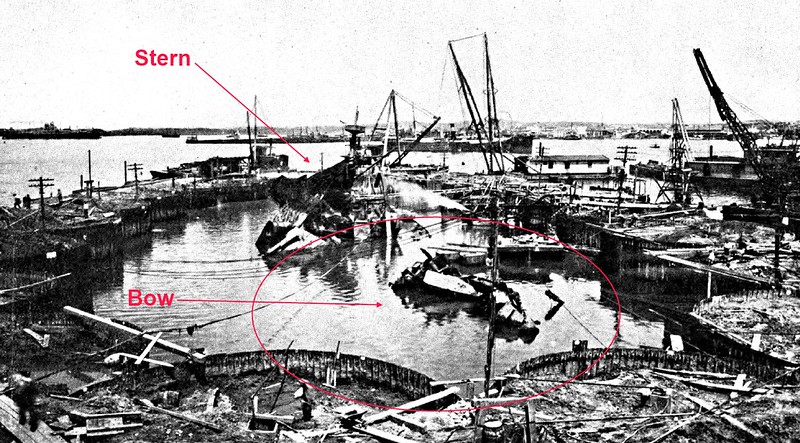
Wreckage of the USS Maine
Reaction from the Hearst and Pulitzer newspapers in New York was a predictable as it was craven. As early as 1896 these outlets had already been fanning the flames of outrage with fake or exaggerated stories of systematic Spanish barbarities, including mass executions and village burnings. Hearst himself is said to have quipped to an artist in the region “You furnish the pictures and I’ll furnish the war”.
The phenomenon was later labelled “yellow journalism” as a reference to The Yellow Kid, a signature comic strip featuring a slum child in a bright yellow nightshirt. The sensationalism reached epic lows with cartoons depicting Spanish officials as butchers and it undoubtedly later pressured President McKinley and the United States into the Spanish-American War.
Fortunately, modern media, politics and industry are nothing like their early 20th century counterparts.
Right?
Adapted from xAI and Grokipedia